
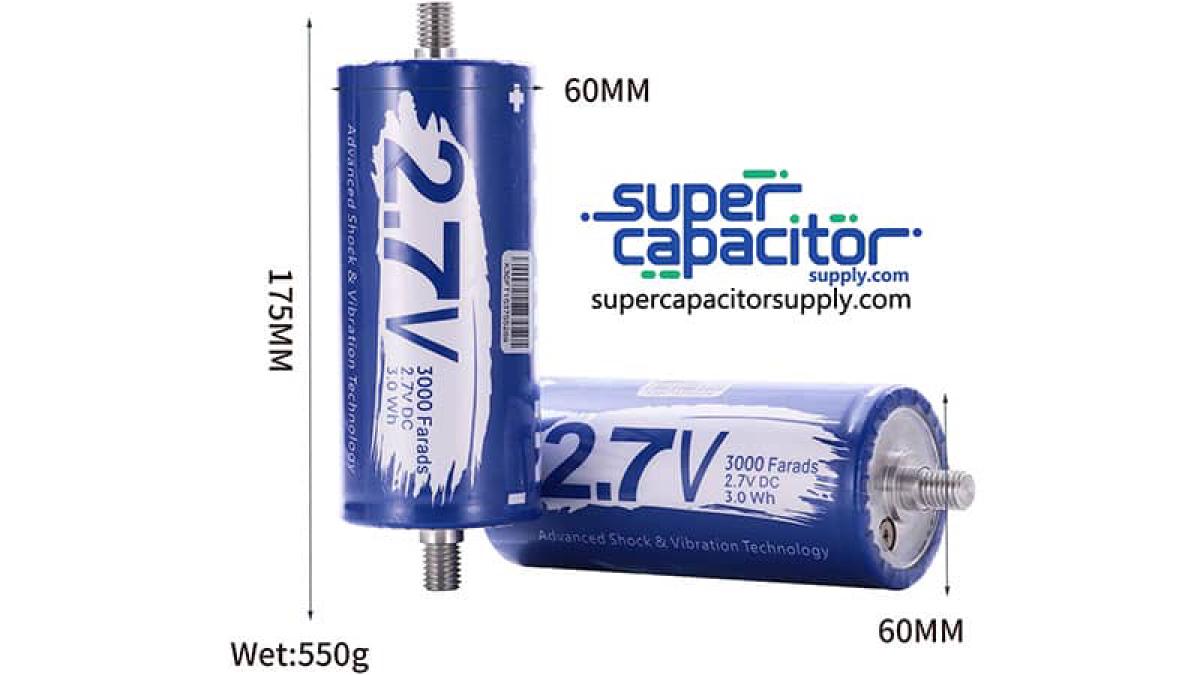
In the demanding world of commercial transportation, reliability is everything. However, for heavy-duty trucks operating in extreme cold—such as Northern Europe, Russia, or North America—winter brings a recurring nightmare: failed engine starts and premature battery death.
As fleet operators look for ways to reduce maintenance costs and improve fuel efficiency through start-stop systems, traditional lead-acid batteries are reaching their physical limits. Learn more about where supercapacitors fit in energy storage.

The Cold Start Challenge: Why Batteries Fail#
In temperatures below -30°C, a standard lead-acid battery can lose over 50% of its effective cranking power. At the same time, the engine oil thickens, requiring more power to turn the engine over.
When a truck is equipped with a start-stop system, the engine may restart dozens of times a day. This frequent high-current discharge “shocks” the battery, leading to:
- Plate sulfation: Rapidly reducing the battery’s capacity.
- Frequent replacements: Batteries that should last 5 years often fail in less than 2.
- Costly downtime: A single failed start in a remote area can cost thousands of dollars in lost time and emergency service.
Why Supercapacitors are the Game-Changer#
Supercapacitors (also known as Ultracapacitors or EDLCs) do not replace the battery; they protect it. By connecting a supercapacitor module in parallel with the battery, the capacitor handles the high-power “burst” required for cranking, while the battery provides long-term energy for electronics.
Technical Advantage Comparison:#
| Feature | Lead-Acid Battery | Supercapacitor (EDLC) |
|---|---|---|
| Cycle Life | 500 – 1,000 cycles | 500,000 – 1,000,000 cycles |
| Operating Temp | Performance drops at < 0°C | Full power at -40°C to +65°C |
| Charge/Discharge | Minutes to hours | Seconds to minutes |
| Internal Resistance | High (increases in cold) | Extremely Low (ESR) |
Industry-Leading Solutions: Maxwell & LS Mtron#
We specialize in sourcing the industry’s most reliable cells for automotive and industrial applications. For heavy-duty truck systems, two models stand out:
- Maxwell BCAP3000 P270 (2.7V 3000F): The global gold standard for reliability and power density.
- LS Mtron LSUC 3000F: A high-performance alternative widely used in AGVs and commercial vehicle modules.
When these 3000F cells are configured into a 48V or 24V module, they provide enough peak current to start a heavy diesel engine even in the dead of winter, without putting any stress on the lead-acid battery. For multi-cell modules, proper balancing circuitry is essential.
Real-World Impact: The 3x Longevity Factor#
The data from large-scale fleet deployments is clear. By using a supercapacitor-assisted start system:
- Battery Life Extension: The battery’s service life is typically extended from 1.5–2 years to 5–6 years—a 3x improvement.
- Fuel Efficiency: Stable start-stop operation allows for fuel savings of 5% to 10%.
- Reliability: In a recent case study of a European commercial vehicle manufacturer, a 48V 18-cell module (3000F) achieved a 100% start success rate at -30°C across a fleet of 100,000 vehicles.
Conclusion: Invest in Reliability#
For fleet managers and automotive engineers, supercapacitors are no longer an optional luxury—they are a financial necessity for reducing Total Cost of Ownership (TCO). By protecting your primary energy source and ensuring every start is successful, you eliminate the hidden costs of cold weather operations.
Ready to upgrade your fleet’s performance? Explore our Inventory of Original Maxwell and LS Mtron Supercapacitors or Contact our Engineering Team today for a customized module consultation.